
Spine Surgery
What we do
Recognizing Common Symptoms
Many patients suffer from debilitating symptoms caused by spinal cord or nerve compression without knowing the exact cause:
Cervical (Neck) & Upper Extremity Symptoms:
"My hands feel numb." / "I have trouble holding chopsticks." / "I keep losing my balance or stumbling while walking."
Common Causes: Cervical Spondylotic Myelopathy, Cervical Disc Herniated Disc, Ossification of the Posterior Longitudinal Ligament (OPLL), or Carpal Tunnel Syndrome.
Lumbar (Lower Back) & Lower Extremity Symptoms:
I have severe lower back pain. / "My sciatica pain is so intense I can barely move." / "My legs get numb and heavy when I walk."
Common Causes: Lumbar Disc Herniation, Lumbar Spinal Stenosis, Spondylolisthesis, or Vertebral Compression Fractures.
"Should you suffer in silence just because of aging?"
While conservative treatments (such as oral medications, traction, or nerve blocks) are often the appropriate first step, they do not resolve every spinal condition. Surgery can often offer a definitive path to freeing patients from chronic pain and numbness.
"Spinal surgery sounds difficult and risky. How can I feel safe?"
Spinal procedures require exceptional expertise. That is why our department is led by a dedicated team of experienced board-certified spine specialists.
To ensure maximum safety, all operations are performed using state-of-the-art surgical technology, including Operating Microscopes and Spinal Endoscopes. This approach minimizes surgical trauma and protects surrounding delicate neural structures.
Seeking a Second Opinion?
If you have been undergoing conservative treatment for a long time without improvement, or if spinal surgery has been recommended and you would like an expert opinion, please do not hesitate to consult us.
Learn More About Treatment at Our Spine & Spinal Cord Center
Fracture Prevention & Osteoporosis Liaison Service (OLS)
We have established a multidisciplinary Osteoporosis Liaison Service (OLS) to focus on the prevention, early diagnosis, and long-term management of osteoporosis and fragility fractures.
Our team of physicians, specialized nurses, physical therapists, pharmacists, dietitians, and laboratory technicians collaborates seamlessly to ensure regional patients receive timely and continuous bone health care.
Discover Our Osteoporosis Liaison Service (OLS)
Conditions we handle
1. Cervical Spine Conditions
Cervical Spondylosis / Degenerative Cervical Spine Disease
Developmental Cervical Spinal Canal Stenosis
Ossification of the Posterior Longitudinal Ligament - OPLL
Cervical Spondylotic Myelopathy
2. Thoracic Spine Conditions
Ossification of the Ligamentum Flavum - OLF
3. Lumbar Spine Conditions
Lumbar Spinal Stenosis
Spondylolysis & Spondylolisthesis
4. Vertebral Compression Fractures
Metastatic Spinal Tumors
5. Spinal Cord Tumors
Intramedullary Tumors
6. Spinal Vascular Malformations & Congenital Anomalies
Spinal Arteriovenous Fistula - AVF
Spinal Epidural Hematoma
Spinal Cord Infarction
Chiari Malformation & Syringomyelia
7. Craniovertebral Junction Anomalies
Atlantoaxial Subluxation / Instability
8. Entrapment Neuropathies / Peripheral Nerve Compression
Thoracic Outlet Syndrome
Tarsal Tunnel Syndrome
Number of cases
Total Inpatient Admissions: 6,406 patient days (or admissions)
List of Doctors
-
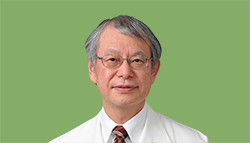 Director, Spine and Spinal Cord Surgery, Kameda Neuroscience CenterMotoo KUBOTASubspeciality
Surgical treatment of spinal, spinal cord, and peripheral nerve disordersDirector, Spine and Spinal Cord Surgery, Kameda Neuroscience Center
Motoo KUBOTA
Subspeciality
Surgical treatment of spinal, spinal cord, and peripheral nerve disordersDepartment name Spine Surgery Medical School Chiba University, School of Medicine Special Qualifications Board Certified Specialist of Japan Neurosurgical Society
Board Certified Specialist of the Japan Stroke Society
Board Advanced Certified Specialist of Japanese Society of Spinal Surgery
Board Director of Japan Society for the Study of Surgical Technique for Spine and Spinal Nerves
Councillor of Japan Medical Society of Spinal Cord Lesion
Board Member, Japan Spinal Neurosurgical Surgical Technique Society
Completed MHLW Designated Online Medical Care TrainingEducation & Career 1982.Mar. Graduated from Chiba University, School of Medicine
1982.Apr. Residency in Neurosurgery, Chiba University Hospital
1983.Oct. General Surgery, Kawatetsu Chiba Hospital
1984.Apr. Neurosurgery, Chiba University Hospital
1986.Apr. Neurosurgery, Chiba Rosai Hospital
1988.Apr. Chiba Emergency Medical Center
1989.Apr. Vice Chief of Neurosurgery, Kawatetsu Chiba Hospital
1990.Apr. Neurosurgery, Chiba University Hospital
1991.Apr.Chief of Neurosurgery, Kawatetsu Chiba Hospital
1993.Apr. Neurosurgery, Chiba University Hospital
1998.Apr. Neurosurgery, Goettingen University Hospital
2005.Jul. Neurosurgery, Chiba University Hospital
2006.Apr. Chief of Neurosurgery, Kameda Medical Center
2007.Apr. Chief of Spinal Surgery, Kameda Medical Center
2024.Jul. Director, Spine and Spinal Cord Surgery, Kameda Neuroscience Center -
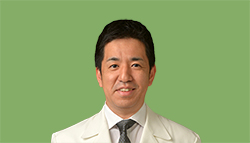 Acting Director, Spine and Spinal Cord Surgery, Kameda Neuroscience CenterRyo HASHIMOTOSubspeciality
Spine and Spinal Cord Disorders
General NeurosurgeryActing Director, Spine and Spinal Cord Surgery, Kameda Neuroscience Center
Ryo HASHIMOTO
Subspeciality
Spine and Spinal Cord Disorders
General NeurosurgeryDepartment name Spine Surgery Medical School Tokyo Medical University Special Qualifications Board-Certified Neurosurgeon (Japan Neurosurgical Society)
Certified Spine Surgeon (Japan Spinal Surgery Society)Education & Career March 2002: Graduated from Tokyo Medical University School of Medicine
April 2002: Clinical Resident, Department of Neurosurgery, Tokyo Medical University Hospital
April 2006: Staff Physician, Department of Neurosurgery, Tokyo Metropolitan Otsuka Hospital
April 2008: Assistant Professor, Department of Neurosurgery, Tokyo Medical University Hospital
April 2010: Staff Physician, Spine and Spinal Cord Surgery, Kameda General Hospital
January 2012: Assistant Professor, Department of Neurosurgery, Tokyo Medical University Hospital
April 2014: Assistant Professor, Department of Neurosurgery, Tokyo Medical University Hachioji Medical Center
April 2019: Chief Physician, Department of Neurosurgery, Kosei Chuo General Hospital
May 2021: Appointed Acting Director, Spine and Spinal Cord Surgery, this hospital
July 2024: Acting Director, Spine and Spinal Cord Surgery, Kameda Neuroscience Center -
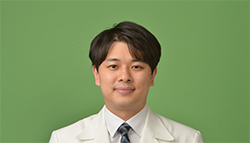 Chief Physician, Spine and Spinal Cord Surgery, Kameda Neuroscience CenterHiroki EGUCHISubspeciality
Craniospinal and Neurological DisordersChief Physician, Spine and Spinal Cord Surgery, Kameda Neuroscience Center
Hiroki EGUCHI
Subspeciality
Craniospinal and Neurological DisordersDepartment name Spine Surgery Medical School Tokyo Medical University Special Qualifications Board-Certified Neurosurgeon (Japan Neurosurgical Society) Education & Career March 2019: Graduated from Tokyo Medical University School of Medicine
April 2019: Tokyo Medical and Dental University Hospital
April 2021: TMG Asaka Medical Center
April 2022: Tokyo Women's Medical University Hospital
April 2023: Department of Neurosurgery, Isesaki-Sawa Medical Association Hospital
April 2024: Tokyo Women's Medical University Yachiyo Medical Center
April 2025: Spine and Spinal Cord Surgery, this hospital
April 2026: Chief Physician, Spine and Spinal Cord Surgery, this hospital -
 Resident PhysicianKeiichiro HIROSE
Resident Physician
Keiichiro HIROSE
Department name Spine Surgery Medical School University of Yamanashi
- Orthopedics
- Sports Medicine Center
- Gastroenterological Surgery
- Plastic Surgery
- Neurosurgery
- Neuroendovascular Surgery
- Spine Surgery
- General Thoracic Surgery
- Cardiovascular
- Breast Center
- Obstetrics
- Gynecology
- Department of Reproductive Medicine (ART Center)
- Urology
- Urogynecology Center
- Dermatology
- Ophthalmology
- Head and Neck Surgery
- Otorhinolaryngology (ENT)
- Urology and Kidney Transplantation Center
- Lymphedema Surgery
- Surgical Oncology

