
Ophthalmology
What we do
As one of the largest hospital-based ophthalmology centers in Japan, our department utilizes state-of-the-art diagnostic and surgical equipment—operating on an electronic medical record system for both outpatient services and day surgeries.
Outpatient examinations and day surgeries are primarily conducted at Kameda Clinic, supported by dedicated ophthalmic technicians. Inpatient care and emergency consultations are provided at Kameda Medical Center (Building A, 3rd Floor & Emergency Center).
From infants to the elderly, and from eyelashes to the optic nerve, we deliver high-quality, comprehensive eye care. When necessary, we collaborate with leading national specialists and academic university centers to ensure optimal clinical outcomes.
**Important Information for Patients Before Your Visit**
Contact Lens Wearers
Remove Lenses Prior to Examination: Except for routine contact lens checkups, diagnostic eye tests cannot be performed while wearing contact lenses.
Please arrive wearing eyeglasses or be prepared to remove your contact lenses before your examination.
Waiting Times & Referrals
Appointment times indicate the start of registration/testing. First-time visits and specialized evaluations may take half a day or longer.
Once conditions stabilize, we coordinate with regional eye clinics for ongoing follow-up care.
Surgical Excellence & Clinical Highlights
Our department specializes in advanced ophthalmic surgeries, providing outcomes comparable to major university hospitals:
Outpatient examinations and day surgeries are primarily conducted at Kameda Clinic, supported by dedicated ophthalmic technicians. Inpatient care and emergency consultations are provided at Kameda Medical Center (Building A, 3rd Floor & Emergency Center).
From infants to the elderly, and from eyelashes to the optic nerve, we deliver high-quality, comprehensive eye care. When necessary, we collaborate with leading national specialists and academic university centers to ensure optimal clinical outcomes.
**Important Information for Patients Before Your Visit**
Contact Lens Wearers
Remove Lenses Prior to Examination: Except for routine contact lens checkups, diagnostic eye tests cannot be performed while wearing contact lenses.
Please arrive wearing eyeglasses or be prepared to remove your contact lenses before your examination.
Dilated Eye Exam Warning
Diagnostic exams may require dilating eye drops. Dilation causes temporary blurred vision and light sensitivity lasting 3 to 6 hours.
Driving a motor vehicle is hazardous while pupils are dilated. Please arrange alternative transportation, refrain from driving, or wait until your vision fully recovers.
Diagnostic exams may require dilating eye drops. Dilation causes temporary blurred vision and light sensitivity lasting 3 to 6 hours.
Driving a motor vehicle is hazardous while pupils are dilated. Please arrange alternative transportation, refrain from driving, or wait until your vision fully recovers.
Waiting Times & Referrals
Appointment times indicate the start of registration/testing. First-time visits and specialized evaluations may take half a day or longer.
Once conditions stabilize, we coordinate with regional eye clinics for ongoing follow-up care.
Surgical Excellence & Clinical Highlights
Our department specializes in advanced ophthalmic surgeries, providing outcomes comparable to major university hospitals:
1. Cataract Surgery: Performed via small-incision, sutureless techniques as either day surgery (outpatient) or short-term inpatient stay. We offer a wide range of intraocular lenses (IOLs) tailored to each patient's lifestyle.
- Recommended Timing for Cataract Surgery: Surgery is recommended when vision changes begin to interfere with daily life. Because surgical risks increase with age, we generally advise completing surgery before age 75. Early surgery may also be recommended if cataracts pose a risk of sudden intraocular pressure elevation (acute glaucoma attack)
2. Glaucoma Surgery: Treatment spans medical therapy (eye drops) to Selective Laser Trabeculoplasty (SLT), Minimally Invasive Glaucoma Surgery (MIGS), Trabeculectomy, and Glaucoma Drainage Implant/Tube Shunt Surgery for refractory cases.
3. Vitreoretinal Surgery: Advanced surgical interventions using cutting-edge equipment for Retinal Detachment, Epiretinal Membrane, Macular Hole, Proliferative Diabetic Retinopathy, and Proliferative Vitreoretinopathy.
4. Oculoplastic & Eyelid Surgery: Surgical correction for Ptosis (drooping eyelids) and Entropion (inward-turning eyelids).
3. Vitreoretinal Surgery: Advanced surgical interventions using cutting-edge equipment for Retinal Detachment, Epiretinal Membrane, Macular Hole, Proliferative Diabetic Retinopathy, and Proliferative Vitreoretinopathy.
4. Oculoplastic & Eyelid Surgery: Surgical correction for Ptosis (drooping eyelids) and Entropion (inward-turning eyelids).
(Updated: February 4, 2025 | Medical Lead: Dr. Koichiro Sugimoto, Director of Ophthalmology)
Conditions we handle
General Ophthalmic Conditions
Surgical Indications
Refractive Errors: Myopia (nearsightedness), Astigmatism, Hyperopia (farsightedness)
Anterior Segment & Surface: Cataracts, Glaucoma, Keratoconjunctivitis, Hordeolum (stye), Dry Eye Syndrome, Corneal Perforation / Trauma
Retinal & Macular Diseases: Rhegmatogenous Retinal Detachment, Diabetic Retinopathy, Hypertensive Retinopathy, Retinal Degenerative Diseases, Uveitis
Pediatric & Neuro-Ophthalmology: Strabismus (crossed eyes), Amblyopia (lazy eye), Ocular Trauma
Anterior Segment & Surface: Cataracts, Glaucoma, Keratoconjunctivitis, Hordeolum (stye), Dry Eye Syndrome, Corneal Perforation / Trauma
Retinal & Macular Diseases: Rhegmatogenous Retinal Detachment, Diabetic Retinopathy, Hypertensive Retinopathy, Retinal Degenerative Diseases, Uveitis
Pediatric & Neuro-Ophthalmology: Strabismus (crossed eyes), Amblyopia (lazy eye), Ocular Trauma
Surgical Indications
Cataract Surgery (including complex & complicated cases)
Glaucoma Surgery (including MIGS & tube shunt implants)
Refractory Vitreoretinal Surgery (Macular Hole, Epiretinal Membrane, Retinal Detachment, Proliferative Diabetic Retinopathy)
Eyelid Surgery (Ptosis, Entropion)
Glaucoma Surgery (including MIGS & tube shunt implants)
Refractory Vitreoretinal Surgery (Macular Hole, Epiretinal Membrane, Retinal Detachment, Proliferative Diabetic Retinopathy)
Eyelid Surgery (Ptosis, Entropion)
Number of cases
Total Outpatient Visits: 35,274 patients
Total Inpatient Admissions: 2,448 patient days (or admissions)
(FY2024 Results)
Total Inpatient Admissions: 2,448 patient days (or admissions)
(FY2024 Results)
List of Doctors
-
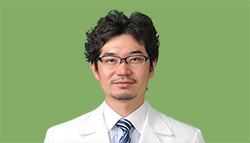 Vice Chief of OphthalmologyDaisuke HORIESubspeciality
GlaucomaVice Chief of Ophthalmology
Daisuke HORIE
Subspeciality
GlaucomaDepartment name Ophthalmology Medical School Kyorin University School of Medicine Special Qualifications Board Certified Specialist of Japanese Ophthalmology Society Education & Career 2002 Mar. Graduated from Kyorin University School of Medicine
2002 Apr. Resident of Kyorin University Hospital
2005 Apr. Secondment to Miyake Hospital,Ophthalmology
2006 Apr. Secondment to Tama Zenshoen
Glaucoma outpatient, Kyorin University Hospital
2012 Apr. Assistant Professor, Kyorin University Hospital
2014 Apr. Ophthalmology Part-time doctor , Kameda Medical Center
2016 Apr. Assistant Chief of Ophthalmology, Kameda Medical Center
2018 Apr. Vice Chief of Ophthalmology, Kameda Medical Center
- Orthopedics
- Sports Medicine Center
- Gastroenterological Surgery
- Plastic Surgery
- Neurosurgery
- Neuroendovascular Surgery
- Spine Surgery
- General Thoracic Surgery
- Cardiovascular
- Breast Center
- Obstetrics
- Gynecology
- Department of Reproductive Medicine (ART Center)
- Urology
- Urogynecology Center
- Dermatology
- Ophthalmology
- Head and Neck Surgery
- Otorhinolaryngology (ENT)
- Urology and Kidney Transplantation Center
- Lymphedema Surgery
- Surgical Oncology

