
Urogynecology Center
What we do
What is Urogynecology?
Urogynecology is a specialized subspecialty at the intersection of Urology and Gynecology. It is dedicated to evaluating and treating sensitive, complex pelvic floor and lower urinary tract conditions in women.
Many women silently endure conditions like organ prolapse, urinary leakage, frequent nighttime urination, or vaginal discomfort—often feeling unsure whether to consult a gynecologist or a urologist. Our center bridges this gap by offering comprehensive, subspecialized care tailored entirely to women's pelvic and urinary health.
Why Choose Kameda’s Urogynecology Center?
Established in May 2007 as one of Japan’s pioneering specialized centers, we provide state-of-the-art, evidence-based treatments for women suffering from pelvic organ prolapse and complex voiding dysfunction.
Key Advantages of Our Center:
1. World-Class Quality & Technology: We perform high-precision, evidence-based surgical procedures (including laparoscopic, transvaginal mesh, non-mesh, and organ-preserving techniques) adhering to top international safety standards.
2. High Surgical Volume & Deep Expertise: Led by renowned specialists Dr. Masayoshi Nomura and Dr. Atsumasa Hayashi, our team’s extensive clinical volume ensures safety and adaptability even in complex or non-standard surgical cases.
3. Personalized & Diverse Options: From conservative management (pelvic floor muscle training, pessary fitting, medications, and $CO_2$ laser therapy) to advanced surgical repair, we customize care to fit each patient's lifestyle and goals.
4. Multi-Location Access & Online Consultations: Patients can access our specialist physicians across multiple convenient locations, as well as via online video consultations:
Urogynecology is a specialized subspecialty at the intersection of Urology and Gynecology. It is dedicated to evaluating and treating sensitive, complex pelvic floor and lower urinary tract conditions in women.
Many women silently endure conditions like organ prolapse, urinary leakage, frequent nighttime urination, or vaginal discomfort—often feeling unsure whether to consult a gynecologist or a urologist. Our center bridges this gap by offering comprehensive, subspecialized care tailored entirely to women's pelvic and urinary health.
Why Choose Kameda’s Urogynecology Center?
Established in May 2007 as one of Japan’s pioneering specialized centers, we provide state-of-the-art, evidence-based treatments for women suffering from pelvic organ prolapse and complex voiding dysfunction.
Key Advantages of Our Center:
1. World-Class Quality & Technology: We perform high-precision, evidence-based surgical procedures (including laparoscopic, transvaginal mesh, non-mesh, and organ-preserving techniques) adhering to top international safety standards.
2. High Surgical Volume & Deep Expertise: Led by renowned specialists Dr. Masayoshi Nomura and Dr. Atsumasa Hayashi, our team’s extensive clinical volume ensures safety and adaptability even in complex or non-standard surgical cases.
3. Personalized & Diverse Options: From conservative management (pelvic floor muscle training, pessary fitting, medications, and $CO_2$ laser therapy) to advanced surgical repair, we customize care to fit each patient's lifestyle and goals.
4. Multi-Location Access & Online Consultations: Patients can access our specialist physicians across multiple convenient locations, as well as via online video consultations:
Kameda Medical Center / Kameda Clinic (Kamogawa, Chiba): Primary surgical and main outpatient facility.
Kameda Kyobashi Clinic (Tokyo): Direct access from Tokyo Station (6-min walk) and connected to Kyobashi Station.
Kameda MTG Clinic (Makuhari, Chiba): Convenient for patients in northern Chiba (6-min walk from Kaihin-Makuhari Station).
Online Teleconsultation: Ideal for second opinions, patients living far away, or those seeking preliminary guidance before visiting in person.
Kameda Kyobashi Clinic (Tokyo): Direct access from Tokyo Station (6-min walk) and connected to Kyobashi Station.
Kameda MTG Clinic (Makuhari, Chiba): Convenient for patients in northern Chiba (6-min walk from Kaihin-Makuhari Station).
Online Teleconsultation: Ideal for second opinions, patients living far away, or those seeking preliminary guidance before visiting in person.
(Updated: 2021.9.30)
Conditions we handle
Target Conditions & Diseases Treated
We provide specialized diagnostic evaluation, conservative management, and advanced surgical care for a wide spectrum of female pelvic and lower urinary tract disorders:
1. Pelvic Organ Prolapse - POP
Conditions where pelvic organs descend or bulge out from the vagina due to weakened pelvic floor support:
We provide specialized diagnostic evaluation, conservative management, and advanced surgical care for a wide spectrum of female pelvic and lower urinary tract disorders:
1. Pelvic Organ Prolapse - POP
Conditions where pelvic organs descend or bulge out from the vagina due to weakened pelvic floor support:
Uterine Prolapse: Descent of the uterus into the vaginal canal.
Cystocele / Bladder Prolapse: Descent of the bladder into the anterior vaginal wall.
Rectocele / Rectal Prolapse: Bulging of the rectum into the posterior vaginal wall or rectal descent through the anus.
Symptoms: Sensations of vaginal heaviness, pelvic pressure, or a noticeable bulging tissue.
Cystocele / Bladder Prolapse: Descent of the bladder into the anterior vaginal wall.
Rectocele / Rectal Prolapse: Bulging of the rectum into the posterior vaginal wall or rectal descent through the anus.
Symptoms: Sensations of vaginal heaviness, pelvic pressure, or a noticeable bulging tissue.
2. Urinary & Bladder Dysfunction
Stress Urinary Incontinence (SUI) : Involuntary leakage during coughing, sneezing, laughing, standing up, or physical exercise.
Urge Urinary Incontinence (UUI): Sudden, intense urge to urinate leading to involuntary leakage before reaching the toilet.
Overactive Bladder (OAB): Urinary frequency (urination every 2 hours), nocturia (waking $\ge 2$ times per night to urinate), or refractory OAB unresponsive to standard medications.
Interstitial Cystitis / Bladder Pain Syndrome: Chronic "mystery" bladder pain, pressure, or frequency without active bacterial infection or abnormal urinalysis.
Recurrent Cystitis & Voiding Difficulties: Recurrent UTIs, feeling of incomplete bladder emptying, painful urination, or weak stream.
Urge Urinary Incontinence (UUI): Sudden, intense urge to urinate leading to involuntary leakage before reaching the toilet.
Overactive Bladder (OAB): Urinary frequency (urination every 2 hours), nocturia (waking $\ge 2$ times per night to urinate), or refractory OAB unresponsive to standard medications.
Interstitial Cystitis / Bladder Pain Syndrome: Chronic "mystery" bladder pain, pressure, or frequency without active bacterial infection or abnormal urinalysis.
Recurrent Cystitis & Voiding Difficulties: Recurrent UTIs, feeling of incomplete bladder emptying, painful urination, or weak stream.
3. Pelvic Floor, Fecal Continence & Postpartum Care
Genitourinary Syndrome of Menopause (GSM): Vaginal dryness, burning, painful intercourse (dyspareunia), or urinary discomfort caused by estrogen deficiency (Advanced CO2 Laser Therapy available).
Fecal Incontinence & Bowel Dysfunction: Involuntary loss of gas or stool, ranging from minor soilage to complete loss of bowel control.
Complex Pelvic Fistulas: Vesicovaginal Fistula (bladder-vaginal connection) and Rectovaginal Fistula.
Postpartum & Other Conditions: Postpartum incontinence/pelvic weakness, urethral caruncle, or pelvic congestion syndrome.
Confidential Helpline & Telephone Consultation:
If you have questions about urine leakage, pelvic organ prolapse, or any lower urinary tract symptoms, please feel free to reach out to our dedicated Urogynecology Consultation Helpline.
Number of cases
Total Outpatient Visits: 3,014 patients
Total Inpatient Admissions: 4,043 patient days (or admissions)
(FY2024 Results)
Total Inpatient Admissions: 4,043 patient days (or admissions)
(FY2024 Results)
List of Doctors
-
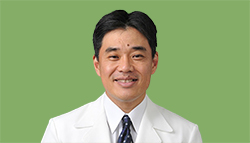 Chief of Urogynecology CenterMasayoshi NOMURASubspeciality
Urogynecology(Pelvic organ prolapse, Urinary incontinence)Chief of Urogynecology Center
Masayoshi NOMURA
Subspeciality
Urogynecology(Pelvic organ prolapse, Urinary incontinence)Department name Urogynecology Center Medical School University of Occupational and Environmental Health, Japan Special Qualifications Member of Japan Urogynecological Association, Japan Society of Obstetrics and Gynecology, ICS, JFPFM, The Japanese Society for Sexual Medicine, IUGA. Education & Career 1993.Mar. Graduated from University of Occupational and Environmental Health, Japan
1993.May. Residency in University of Occupational and Environmental Health Hospital
1994.Mar. Fukushima Rousai Hospital
1997.Jan. University of Occupational and Environmental Health Hospital
1997.Apr. Graduate School of University of Occupational and Environmental Health
2003.Apr. Assistant, University of Occupational and Environmental Health
2006.Apr. Associate Professor, University of Occupational and Environmental Health
2008.Apr. Vice Chief, Kyushu Rosai Hospital
2009.Apr. Vice Chief of Urogynecology Center, Kameda Medical Center
2010.May. Vice Chief of Obstetrics and Gynecology, Chief of Urogynecology Center, Kameda Medical Center -
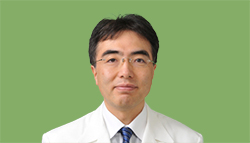 Vice Chief of Urogynecology CenterTokumasa HAYASHISubspeciality
UrologyVice Chief of Urogynecology Center
Tokumasa HAYASHI
Subspeciality
UrologyDepartment name Urogynecology Center Medical School Kurume University School of Medicine Special Qualifications Board Certified Specialist and Advanced Certified Speialist of The Japanese Urological Association
Board Certified Physician of Japanese Board of Cancer Therapy
Board Certified Physician of The Japanese Continence SocietyEducation & Career 1999 Mar. Graduated from Kurume University School of Medicine
1999 May. Urology, Kurume University Hospital
2000 Feb. Urology, Omuta City Hospital
2001 Jul. Urology, Kurume University Hospital
2005 Apr. Kurume University School of Medicine Hospital,Graduate School of Medicine Physiology
2010 Apr. Urology, Kurume University Hospital
2012 Apr. Urology, Kurume University Medical Center
2017 Apr. Urogynecology Center, Kameda Medical Center
2020 Jan. Vice Chief of Urogynecology Center, Kameda Medical Center
- Orthopedics
- Sports Medicine Center
- Gastroenterological Surgery
- Plastic Surgery
- Neurosurgery
- Neuroendovascular Surgery
- Spine Surgery
- General Thoracic Surgery
- Cardiovascular
- Breast Center
- Obstetrics
- Gynecology
- Department of Reproductive Medicine (ART Center)
- Urology
- Urogynecology Center
- Dermatology
- Ophthalmology
- Head and Neck Surgery
- Otorhinolaryngology (ENT)
- Urology and Kidney Transplantation Center
- Lymphedema Surgery
- Surgical Oncology

