
Sarcoma Medicine
What we do
Online Consultation Now Available:
We have launched our dedicated Sarcoma Online Telemedicine Service to support remote patients, families, and referring physicians across Japan. Delivering our uncompromised "Kameda Quality Care", we offer second opinions and seamless treatment coordination beyond geographical boundaries.
Background & Establishment of Japan's First Sarcoma Department
Following the 2016 revision of the Cancer Control Act—which mandated accelerated research and development for rare and refractory cancers—Kameda General Hospital established the Sarcoma Comprehensive Treatment Center in September 2019. Within this center, we opened the first independent "Department of Sarcoma" in Japan.
Rather than operating as a loose coalition of separate departments, our department brings together experts from diverse specialties into one unified, synergistic clinical unit. The establishment of this dedicated department fulfills a long-awaited dream shared by medical professionals, sarcoma patients, and their families nationwide.
Understanding Sarcomas & Rare Cancers
Carcinoma vs. Sarcoma: While carcinomas arise from epithelial cells lining internal organs or skin, sarcomas arise from deep soft tissues (smooth muscle, skeletal muscle, fat, blood vessels, nerves, connective tissues) and bone/cartilage. Gastrointestinal Stromal Tumors (GIST), carcinosarcomas, malignant phyllodes tumors, and malignant mesotheliomas also share sarcoma-like characteristics.
Rarity & Clinical Challenges: Sarcomas are exceptionally rare, accounting for only about 2% of all adult solid malignant tumors (85% soft tissue sarcomas, 15% bone/cartilage sarcomas). Soft tissue sarcomas affect roughly 3.6 per 100,000 people annually in Japan ($\approx$ 3,600 new cases per year).
Why Soft Tissue Sarcomas Are Complex:
Role of the Comprehensive Sarcoma Treatment Center
While primary local tumors are often initially treated surgically, recurrent or metastatic sarcomas spread hematogenously (via bloodstream) throughout the body, making ongoing care under single-organ departments exceptionally difficult.
Our center addresses this by shifting from organ-based care to a treatment-modality-based centralized care system. We combine expert pharmacotherapy, targeted local control therapies (radiation, radiofrequency ablation [RFA], cryotherapy, transarterial embolization [TAE]), specialized surgery, and cancer genomic medicine under one roof.
Outpatient Scheduling & Online Registration
We have launched our dedicated Sarcoma Online Telemedicine Service to support remote patients, families, and referring physicians across Japan. Delivering our uncompromised "Kameda Quality Care", we offer second opinions and seamless treatment coordination beyond geographical boundaries.
Background & Establishment of Japan's First Sarcoma Department
Following the 2016 revision of the Cancer Control Act—which mandated accelerated research and development for rare and refractory cancers—Kameda General Hospital established the Sarcoma Comprehensive Treatment Center in September 2019. Within this center, we opened the first independent "Department of Sarcoma" in Japan.
Rather than operating as a loose coalition of separate departments, our department brings together experts from diverse specialties into one unified, synergistic clinical unit. The establishment of this dedicated department fulfills a long-awaited dream shared by medical professionals, sarcoma patients, and their families nationwide.
(Updated | Medical Lead: Dr. Katsuhito Takahashi, Director of Sarcoma Department)
Understanding Sarcomas & Rare Cancers
Carcinoma vs. Sarcoma: While carcinomas arise from epithelial cells lining internal organs or skin, sarcomas arise from deep soft tissues (smooth muscle, skeletal muscle, fat, blood vessels, nerves, connective tissues) and bone/cartilage. Gastrointestinal Stromal Tumors (GIST), carcinosarcomas, malignant phyllodes tumors, and malignant mesotheliomas also share sarcoma-like characteristics.
Rarity & Clinical Challenges: Sarcomas are exceptionally rare, accounting for only about 2% of all adult solid malignant tumors (85% soft tissue sarcomas, 15% bone/cartilage sarcomas). Soft tissue sarcomas affect roughly 3.6 per 100,000 people annually in Japan ($\approx$ 3,600 new cases per year).
Why Soft Tissue Sarcomas Are Complex:
1. High Rarity: Very few total cases nationally.
2. Anatomical & Age Diversity: Arise anywhere from head to toe, across all age groups from children to the elderly, making them difficult to fit into traditional single-organ medical frameworks.
3. Therapeutic Limitations: Over 50% of cases lack effective insurance-covered systemic drug therapies for tumor shrinkage.
2. Anatomical & Age Diversity: Arise anywhere from head to toe, across all age groups from children to the elderly, making them difficult to fit into traditional single-organ medical frameworks.
3. Therapeutic Limitations: Over 50% of cases lack effective insurance-covered systemic drug therapies for tumor shrinkage.
Role of the Comprehensive Sarcoma Treatment Center
While primary local tumors are often initially treated surgically, recurrent or metastatic sarcomas spread hematogenously (via bloodstream) throughout the body, making ongoing care under single-organ departments exceptionally difficult.
Our center addresses this by shifting from organ-based care to a treatment-modality-based centralized care system. We combine expert pharmacotherapy, targeted local control therapies (radiation, radiofrequency ablation [RFA], cryotherapy, transarterial embolization [TAE]), specialized surgery, and cancer genomic medicine under one roof.
Outpatient Scheduling & Online Registration
Dr. Katsuhito Takahashi (Director): Monday – Wednesday (First-time visitors will be evaluated by Dr. Takahashi)
Dr. Jun Yajima: Saturday
Dr. Jun Yajima: Saturday
Note: Consultations are by appointment only.
How to Book & Register:
How to Book & Register:
Appointment Center: TEL +81-4-7099-1111
Online Membership & Consultation Portal: Register / Book via SmartCure Portal
Online Membership & Consultation Portal: Register / Book via SmartCure Portal
Conditions we handle
We provide specialized diagnostic, therapeutic, and second-opinion care for:
Soft Tissue Sarcomas: Leiomyosarcoma, Liposarcoma, Rhabdomyosarcoma, Angiosarcoma, STUMP, Endometrial Stromal Sarcoma / Undifferentiated Uterine Sarcoma, Fibrosarcoma, Undifferentiated Pleomorphic Sarcoma (UPS), Synovial Sarcoma, Desmoplastic Small Round Cell Tumor (DSRCT), Malignant Peripheral Nerve Sheath Tumor (MPNST), Alveolar Soft Part Sarcoma, Clear Cell Sarcoma.
Bone & Cartilage Sarcomas: Ewing Sarcoma, Chondrosarcoma, Osteosarcoma.
GIST & Related Rare Neoplasms: KIT-positive Gastrointestinal Stromal Tumors (GIST), Carcinosarcoma, Malignant Phyllodes Tumor of the breast, Malignant Mesothelioma, Epithelioid Hemangioendothelioma.
Soft Tissue Sarcomas: Leiomyosarcoma, Liposarcoma, Rhabdomyosarcoma, Angiosarcoma, STUMP, Endometrial Stromal Sarcoma / Undifferentiated Uterine Sarcoma, Fibrosarcoma, Undifferentiated Pleomorphic Sarcoma (UPS), Synovial Sarcoma, Desmoplastic Small Round Cell Tumor (DSRCT), Malignant Peripheral Nerve Sheath Tumor (MPNST), Alveolar Soft Part Sarcoma, Clear Cell Sarcoma.
Bone & Cartilage Sarcomas: Ewing Sarcoma, Chondrosarcoma, Osteosarcoma.
GIST & Related Rare Neoplasms: KIT-positive Gastrointestinal Stromal Tumors (GIST), Carcinosarcoma, Malignant Phyllodes Tumor of the breast, Malignant Mesothelioma, Epithelioid Hemangioendothelioma.
Number of cases
Total Outpatient Visits: 1,672 patients
List of Doctors
-
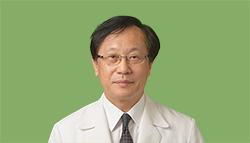 Director, Department of Sarcoma Oncology / Director, Sarcoma Comprehensive Treatment CenterKatsuhito TAKAHASHISubspeciality
Rare Cancer / Sarcoma, Cancer Genomic Medicine (Sarcoma, Gastrointestinal Stromal Tumor (GIST), Malignant Phyllodes Tumor, Epithelioid Hemangioendothelioma)Director, Department of Sarcoma Oncology / Director, Sarcoma Comprehensive Treatment Center
Katsuhito TAKAHASHI
Subspeciality
Rare Cancer / Sarcoma, Cancer Genomic Medicine (Sarcoma, Gastrointestinal Stromal Tumor (GIST), Malignant Phyllodes Tumor, Epithelioid Hemangioendothelioma)Department name Sarcoma Medicine Medical School Ehime University School of Medicine Special Qualifications Board Certified Specialist and Certified Instructor of the Japanese Sarcoma Association (JSA) (Physician, General Sarcoma, Genomic Medicine)
Certified Internal Medicine Physician of the Japanese Society of Internal Medicine
Completed Online Medical Care Training Course designated by MHLWEducation & Career March 1983 – Graduated from Ehime University School of Medicine
April 1984 – Graduate School of Medicine, Ehime University (Doctoral Program)
September 1984 – Graduate School of Medicine, Osaka University (Doctoral Program)
October 1988 – Assistant Professor (Ministry of Education), Faculty of Medicine, Ehime University (Second Department of Internal Medicine)
September 1989 – Fellow at Boston Children's Hospital, Harvard Medical School
March 1991 – Research Fellow at Howard Hughes Medical Institute, Harvard University
September 1991 – Senior Researcher at Osaka Medical Center for Cancer and Cardiovascular Diseases (now Osaka International Cancer Institute)
April 1998 – Invited Associate Professor, Graduate School of Medicine, Osaka University
April 2001 – Director, Osaka Medical Center for Cancer and Cardiovascular Diseases
August 2013 – Invited Instructor (Medical Oncology) at Kameda Kyobashi Clinic
February 2017 – Professor and Director of the Sarcoma Center at International University of Health and Welfare Mita Hospital
September 2019 – Appointed as Director of Medical Oncology, Department of Sarcoma Oncology and Director of the Sarcoma Comprehensive Treatment Center at Kameda General Hospital
September 2022 – Appointed as Director, Department of Sarcoma Oncology and Director, Sarcoma Comprehensive Treatment Center at Kameda General Hospital
- Orthopedics
- Sports Medicine Center
- Gastroenterological Surgery
- Plastic Surgery
- Neurosurgery
- Neuroendovascular Surgery
- Spine Surgery
- General Thoracic Surgery
- Cardiovascular
- Breast Center
- Obstetrics
- Gynecology
- Department of Reproductive Medicine (ART Center)
- Urology
- Urogynecology Center
- Dermatology
- Ophthalmology
- Head and Neck Surgery
- Otorhinolaryngology (ENT)
- Urology and Kidney Transplantation Center
- Lymphedema Surgery
- Surgical Oncology

